

How to Hire an AI Engineering Partner: Step by Step

Tanjim Islam
Founder & CEO · · 11 min read


To hire an AI engineering partner, write down the outcome you need, shortlist three to five partners, and test each one twice: click through the sample flows on their live products, then ask for proof their AI works in production. Meet the actual team, start with a paid first piece, and put ownership in writing.
The rest of this guide walks through each step, from the first call to a signed scope, with the scorecard we would use if we were the buyer.
Why is hiring an AI engineering partner harder than hiring a normal dev shop?
An AI product has two ways to fail. The software can break, like any software. And the AI inside it can be confidently wrong, slowly drift, or cost more per run than anyone planned. A partner has to handle both.
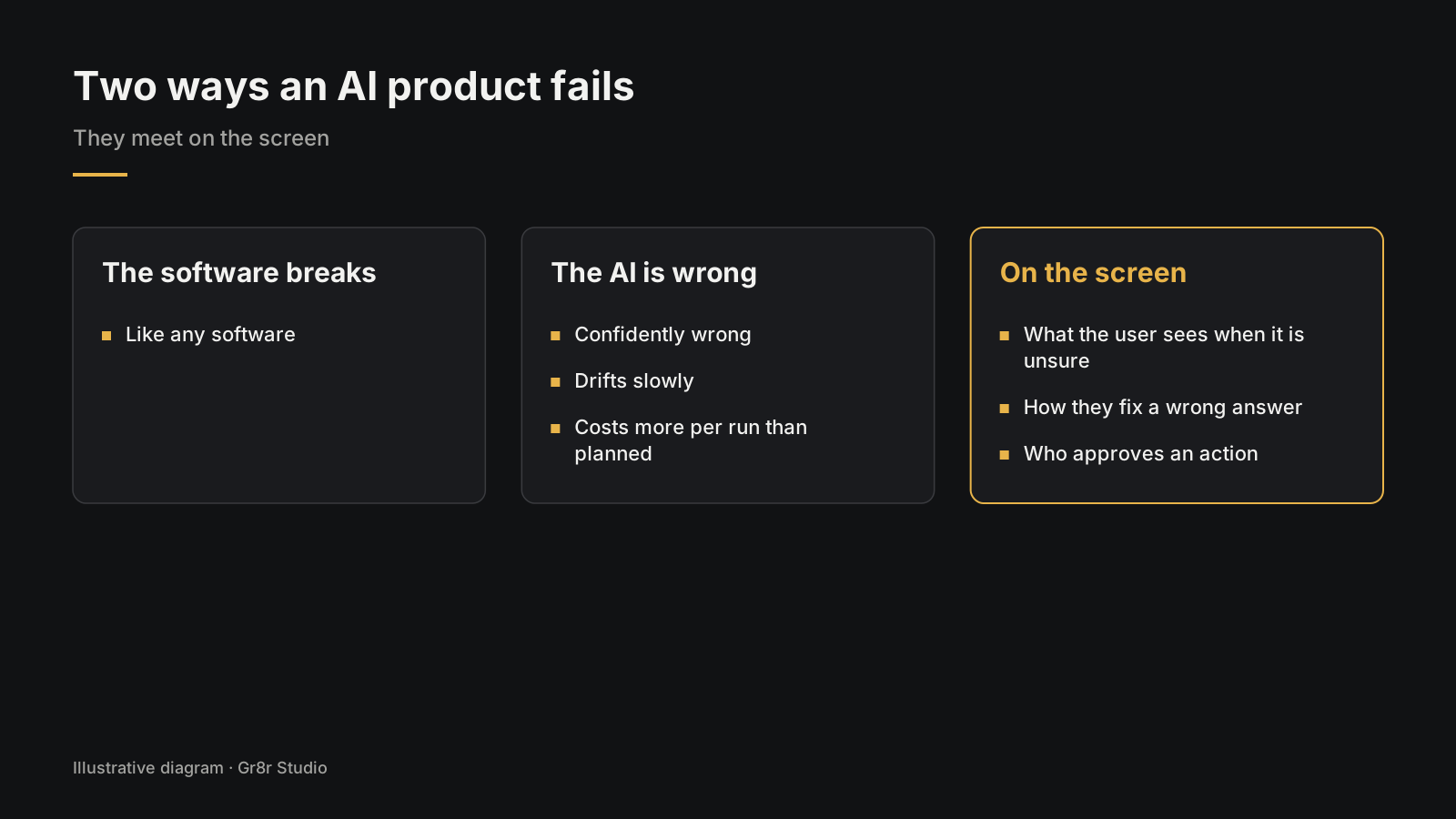
Most hiring guides treat design and AI engineering as two separate purchases. You hire one team to make the screens and another to wire up the model. In practice the two failures meet on the screen. When the AI is unsure, what does the user see? When it is wrong, how do they fix it? When it wants to act, who approves? If nobody owns those moments, the product feels broken even when the model is fine.
So the hiring process needs two tests: one for the product craft, one for the AI. The steps below build both into a normal buying process.
how to choose an AI MVP development company covers the wider decision of what kind of partner to look for. This guide is the hands on process.
Step 1: Do you need a partner at all?
Start by checking whether a partner is the right shape for the job. A partner fits when the work is defined, you need several skills at once, and you want something live within months.
Hire your own team when the work is the core of the business for years, you can wait for hiring, and you have someone senior to lead it. Use a freelancer for a narrow, well defined piece. A technical cofounder makes sense when you want a long term owner with equity. The full comparison is in cofounder, hire, freelancer or product partner for your v1. The partner or in house comparison is at AI development agency vs in house team.
Step 2: How do you write a brief a partner can price?
Write one page. A good brief makes good partners sharper and weak ones easier to spot, because everyone answers the same question.
Put five things on it:
- The outcome. What changes for a customer or your team when this ships. "Support agents answer refund questions in one screen" beats "build an AI chatbot".
- The users. Who uses it, how often, and what they use today.
- The data. Where the inputs live and who controls access.
- The limits. Deadline, budget range, and anything that cannot change, such as your hosting or a compliance rule.
- What you already have. Designs, a prototype, an existing app, a model you have tested.
Keep solutions out of it. If you write "use model X with tool Y", you will get quotes for model X with tool Y, and miss the partner who would have told you a simpler route.
Step 3: How do you build a shortlist?
Find candidates through people you trust first, then through work you can see. In our view, three to five partners is the right number: enough to compare, few enough to give each a real look.
Cut anyone who cannot show you live work. Case study pages with mockups are a start. A product you can open in a browser is better. Also cut anyone whose first response is a price before a question. A partner who prices a one page brief without asking anything has not read it.
Step 4: What should you listen for on the first call?
Listen for questions. The best first calls feel like the partner is interviewing you about the problem.
Good signs: they ask who the users are, what happens today, what a wrong answer costs, and where the data lives. They push back on part of the brief. They tell you something that would be cheaper or simpler.
Watch for a team that agrees with everything, promises a timeline before hearing the details, or talks mostly about the model they like. The longer list of questions to ask is in questions to ask before you sign a dev partner.
Step 5: How do you test a partner's live products?
Click through their products. Use the demo accounts or sample flows they point you to, and do not change real data or run security tests on systems you do not own. Twenty minutes of clicking tells you more about a team's craft than any slide deck.
Ask for links to products they designed and built, then check these moments:
- First run. Open it fresh. Do you know what to do first?
- Empty state. What do you see before there is any data?
- Error. Enter something odd. Does it explain what went wrong and offer a next step?
- AI uncertainty. Ask something the AI should not know. Does it say so, or invent an answer?
- Approval. If the AI can act, does it ask first for anything risky? Can you undo?
- Mobile. Open it on your phone.
- Slow network. Throttle your own browser connection. Does anything tell you it is working?
You are checking whether the team designs for the moments users actually hit. Teams that only design the happy path will build you a happy path.
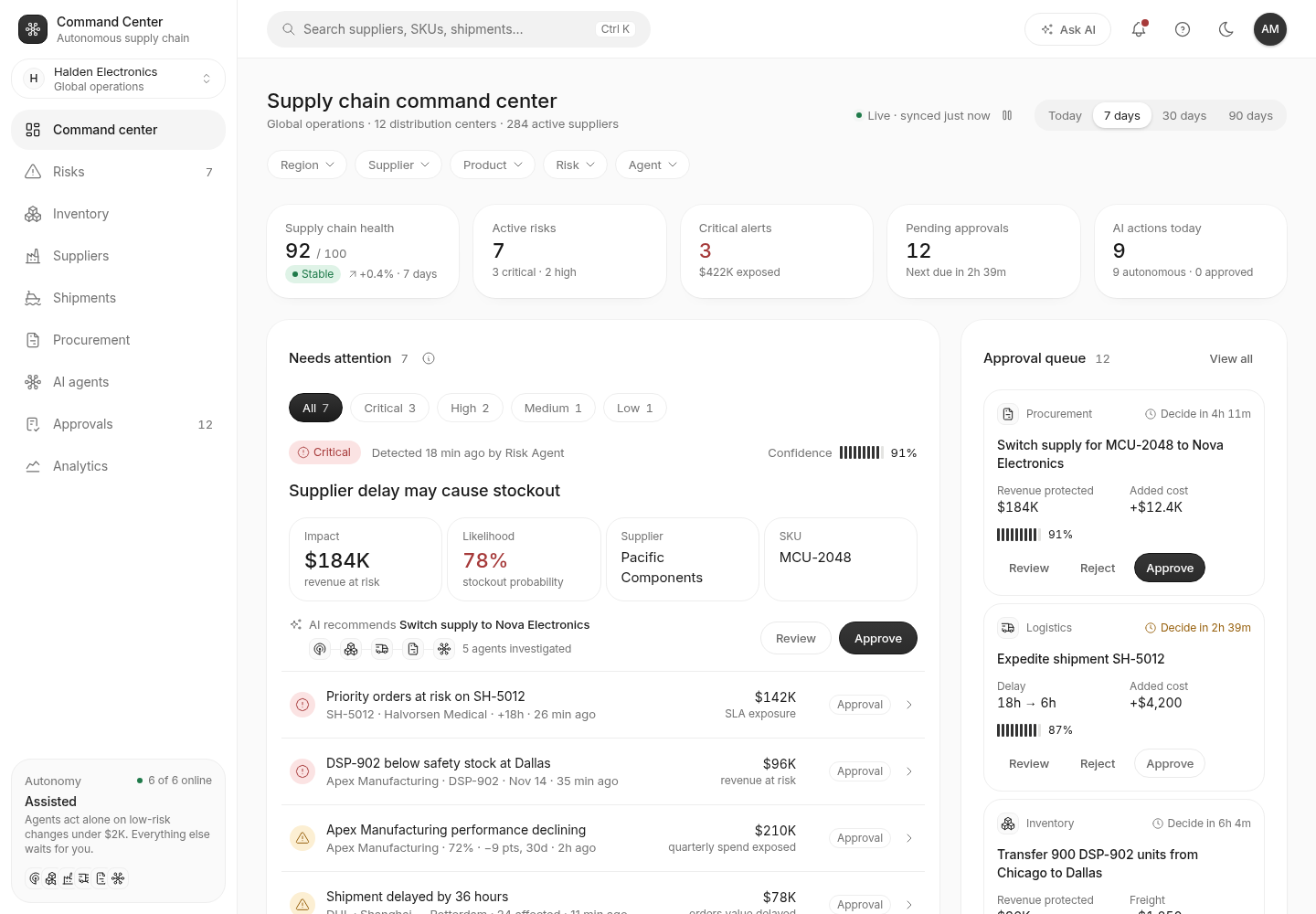
You can run this same click test on products Gr8r built itself: try it on Convoy, a supply chain command center where agents act alone only on low-risk changes under a set limit and everything else waits for approval. Built by Gr8r for its own portfolio. Not client work. More are listed on our products page. Judge us by the same test.
Step 6: How do you check that their AI works in production?
Ask how they know the AI is good before customers see it, how they keep it safe, and how they watch it after launch. Real answers come with examples.
Testing before launch. Ask: "How do you test AI output before it ships?" A good answer describes a set of real examples with known right answers that they run every time something changes, and a bar the feature has to clear. Ask to see one.
Safety. The OWASP Top 10 for LLM applications (2025 edition) lists risks such as prompt injection, sensitive information disclosure and excessive agency (OWASP GenAI Security Project, LLM Top 10). Ask which of these apply to your product and what they do about each. You want specifics: what the AI can and cannot access, which actions need approval, how inputs are checked.
After launch. Ask how they track quality, cost per run and failures once real users arrive, and who gets told when something drifts.
Risk thinking. The NIST AI Risk Management Framework, released January 2023, describes trustworthy AI as valid and reliable, safe, secure and resilient, accountable and transparent, explainable and interpretable, privacy enhanced, and fair (NIST AI RMF 1.0). A partner does not need to quote it. They should be able to tell you how your product will meet the parts that matter for your users.
If you handle personal data in the UK, the Information Commissioner's Office publishes guidance on AI and data protection (ICO, guidance on AI and data protection). A partner working with that data should know it exists.
Step 7: Who will actually do the work?
Meet the people who will design and build your product before you sign. The team on the sales call is sometimes different from the team on the project.
Ask for the names and roles of the people on your project, how much of their week is yours, and who you call when something goes wrong. Ask to speak with the designer and the engineer for ten minutes each. Ask what happens if one of them leaves halfway through.
One question to ask every partner, including us: "Will the people on this call be the people doing the work?" A clear yes, with names, is what you want to hear.
Step 8: Which engagement model should you sign?
Choose the model that matches how well you know the scope. Fixed scope works when the work is clear. Time and materials works when you expect to learn as you go.
| Model | Works when | Watch for |
|---|---|---|
| Fixed scope | The work is well defined and unlikely to change | Change requests becoming a second negotiation |
| Time and materials | You expect to learn and adjust | Spend without visible progress; insist on weekly demos |
| Paid first piece, then decide | Scope is unclear | Agree what you receive at the end of the first piece |
The full comparison is in fixed scope or time and materials for your AI build, and what drives the budget is in what drives the cost of an AI app. For agents that take actions, see what drives the cost of AI agent development.
Whatever model you pick, ask for working software at a steady rhythm. The Agile Manifesto put it as valuing "customer collaboration over contract negotiation" (Manifesto for Agile Software Development, 2001). A contract still matters. Weekly demos keep both sides honest.
Step 9: Should you start with paid discovery?
For most AI builds, yes. A short paid first piece lets you see how a partner works before you commit the full budget, and it gives you something useful even if you walk away.
The UK Government Digital Service treats discovery as its own phase. Its service manual says "around 4 to 8 weeks is typical" and "You should not start building your service in discovery" (GOV.UK Service Manual, How the discovery phase works). That guidance is written for public services, but the principle carries: learn first, then build.
A startup rarely needs eight weeks. What matters is that the first piece ends with something concrete: a written scope, tested screens, or a working prototype on your data. What a discovery phase should hand you is in What Is Product Discovery, and What Should It Hand You?.
Step 10: What should the contract say about ownership?
The contract should say you own everything the partner makes for you once it is paid for. For an AI product, "everything" is a longer list than for a normal app.
Check that ownership covers:
- Code, in a repository you control from day one
- Designs, the source files as well as exported images
- Prompts and model settings, including system prompts and tool definitions
- Evaluation sets, the examples and right answers used to test the AI
- Data you provide and data the product collects
- Accounts: hosting, domains, AI provider keys and analytics, in your name
- Documentation good enough for another team to take over
At Gr8r, clients own everything once it's paid for. Ask every partner on your list to put the same in writing.
Step 11: How do you compare partners side by side?
Score every partner on the same sheet, right after each step, while it is fresh. The weights below are our suggestion; change them to fit what matters most to you.
| Area | What you are scoring | Suggested weight |
|---|---|---|
| Understanding | Did they ask good questions and push back on the brief? | 15% |
| Product craft | How did their live products do on the click test? | 20% |
| AI in production | Could they show testing, safety and monitoring? | 20% |
| Team | Did you meet the real people, and are they senior enough? | 15% |
| Way of working | Weekly demos, clear communication, a sensible first piece | 10% |
| Ownership | Will they sign the full ownership list? | 10% |
| Fit | Budget, timeline and how it felt to work with them | 10% |
Score each area from 1 to 5, multiply by the weight, and add up. If two partners are close, the paid first piece decides.
What red flags should end the conversation?
Walk away from a partner who cannot show live work, will not let you meet the team, avoids questions about AI testing, or hesitates to give you ownership in writing. The full list, with what each one looks like in practice, is in red flags when hiring a software partner.
What happens after you sign?
The first two weeks set the pattern. Expect a kickoff, access to your systems, a first concept or prototype, and a weekly rhythm of demos and decisions. What a good start looks like is in your first two weeks with a new product partner.
Frequently asked questions
How do you hire an AI engineering partner?
Write a one page brief with the outcome you need, shortlist three to five partners, and run two tests on each: click through their live products, then ask for evidence that their AI works in production. Meet the people who will do the work, start with a paid first piece, agree ownership in writing, and score everyone on the same sheet.
What should an AI engineering partner prove before you sign?
They should show live products you can open, explain how they test AI output before launch, show how they guard against problems like prompt injection, and describe how they monitor quality and cost after launch. Ask for real screens and real process, and let slides come second.
Is paid discovery worth it before a full build?
In our view, yes, for anything larger than a small fixed task. A short paid first piece shows you how the partner thinks, writes and ships before you commit the full budget. Agree up front what you will receive at the end, such as a scope, screens or a working prototype.
Who should own the code, designs and prompts?
You should. Any partner's contract should say that code, designs, prompts, evaluation sets, model settings, data and accounts belong to you once paid for. At Gr8r, clients own everything once it's paid for.
Should you hire a partner or build an in house team?
A partner suits a defined build where you need design, engineering and AI skills quickly. An in house team suits work that will run for years at the core of the business. Many companies use a partner for v1 and hire as the product settles.
Where to start this week
This week, do four things:
- Write the one page brief.
- List five candidates and cut anyone without live work.
- Book first calls and run the click test before each one.
- Copy the scorecard and fill it in as you go.
If you want help with this, book a 30 minute call.
Related reading
- questions to ask before hiring a software development company
- red flags when hiring a software development company
- what drives the cost of an AI app
- the AI ownership checklist
- how to build AI agents for business
- AI Software Development
- AI Agent Development
Tanjim Islam is the founder of Gr8r Studio, a digital product and AI engineering partner for scaleups and enterprise teams, founded in 2023.