Skip to content
5 free audits openClaim a spot →

How we work

Solve the right problem. Then build it properly.

Every engagement starts with a business problem and ends with an accountable outcome. Five stages, each with outputs you can see and a decision before the next one.

  1. G1DiscoverUnderstand the business problem
  2. G2DefineAgree on a feasible plan
  3. G3DesignMake the solution understandable
  4. G4EngineerDeliver dependable working software
  5. G5ImproveProve value and enable ownership
  • Claude
  • Codex
  • Cursor

AI helps us move faster.Our team makes the decisions and stands behind the work.

  • Savari
  • hyperAI
  • ImmoAdmin
  • Spring
  • OrthoTropic
  • Clover
  • uptk

Principles

Six rules every project runs on.

We do not use AI to replace thinking. We use it to do more of it, faster. Every week, AI helps us move through the parts of the process that should not slow us down, so our designers can spend time on the work that actually matters.

  • The problem before the technology

    We map the problem, the people and the systems before proposing screens, code or AI.

  • No launch dates before discovery

    Durations depend on scope and phases may overlap. We agree the plan in Define, not before.

  • A decision at every gate

    Each stage ends with a written sign-off by your sponsor and our delivery lead.

  • People review what AI produces

    Where a wrong answer matters, a person checks it, and there is always an exception path.

  • Working progress, every week

    A weekly demo of real work, not slides, so nothing important happens out of sight.

  • You own what we build

    Code, designs, data and documentation are handed over, with a support statement.

The Signature Delivery Framework

Five stages, five gates.

Every stage has a goal, outputs you can see, and a gate where you decide what happens next.

  1. G1 · Discover

    Understand the business problem

    Gate: Evidence-backed opportunity and an agreed problem

  2. G2 · Define

    Agree on a feasible plan

    Gate: Approved scope, success criteria and architecture direction

  3. G3 · Design

    Make the solution understandable

    Gate: A tested critical experience and engineering-ready decisions

  4. G4 · Engineer

    Deliver dependable working software

    Gate: A tested, accepted, launch-ready release

  5. G5 · Improve

    Prove value and enable ownership

    Gate: Results reviewed, backlog prioritised, ownership handed over

  6. Every gate

    At every gate, you decide.

    • Accept
    • Accept with conditions
    • Revise
    • Stop

Working rhythm

How we keep you in the loop.

No big reveals after two weeks of silence. We share progress regularly, keep feedback loops tight, and move fast without losing you along the way.

60–90min
Kickoff to align goals, scope, risks and how we'll communicate
30–60min
Weekly demo of working progress, with decisions recorded
5gates
Written sign-offs, one at the end of every stage
1board
One shared place for the brief, files, feedback and decisions

Honest answers

Discovery can end in five different answers.

We recommend what solves the problem, even when it means building less.

Discovery
  1. 01No AI is needed
  2. 02An off-the-shelf tool is enough
  3. 03Rules-based automation
  4. 04A custom product
  5. 05An AI-assisted solution

Tools

The tools behind every project

We keep the stack flexible. These are the tools we use most across design, build, AI, and delivery.

Design

  • Figma
  • Framer
  • Claude Design
  • Rive
  • Adobe Illustrator
  • Adobe Photoshop

AI & Build

  • Claude
  • Cursor
  • Perplexity
  • V0
  • Lovable
  • Midjourney

Development

  • React
  • Next.js
  • TypeScript
  • Node.js
  • React Native
  • Supabase

Project & Delivery

  • Notion
  • Linear
  • Loom
  • Google Meet
  • Slack
  • ClickUp

Proof

The framework, applied.

The problem, our role and the result, before you open a single page.

  1. Shipped · 62 days · Web app + WebsiteSaaSCRM

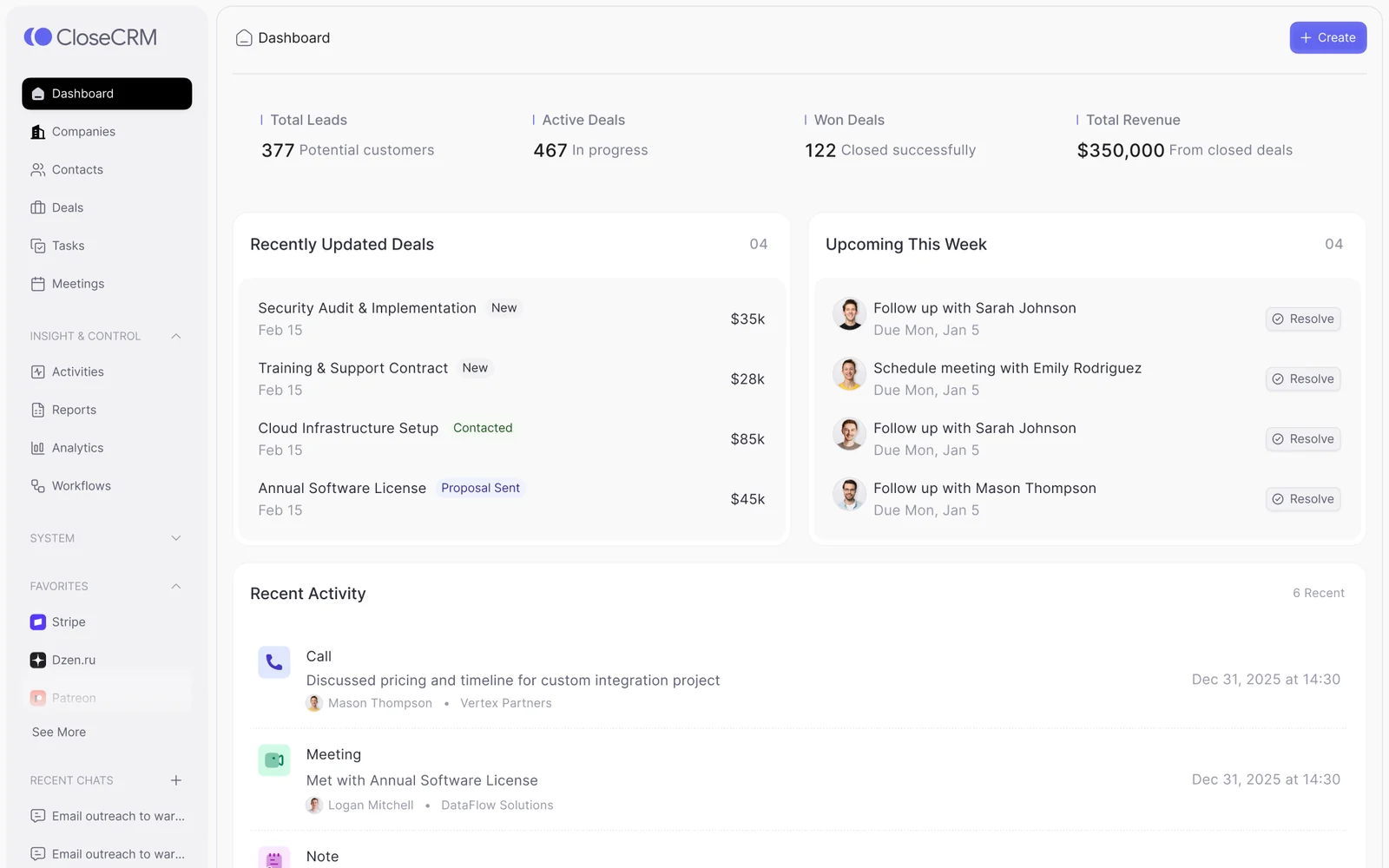
    CloseCRM · CRM web app and website · 2026

    Built by Gr8r for its own portfolio. Not client work.

    CloseCRM: a calmer workspace for busy sales teams.

    Reps and managers work across companies, contacts, deals, tasks and inboxes. When those live in separate places, the next action is hard to spot and records drift out of date. We framed the brief around two questions: what should a rep do next, and what does a manager need to trust the pipeline?

    What we did
    UX, UI, Design system, Website
    Outcome
    62 days, 3 phases
    Read the case study: CloseCRM
  2. Product case studyAISaaS

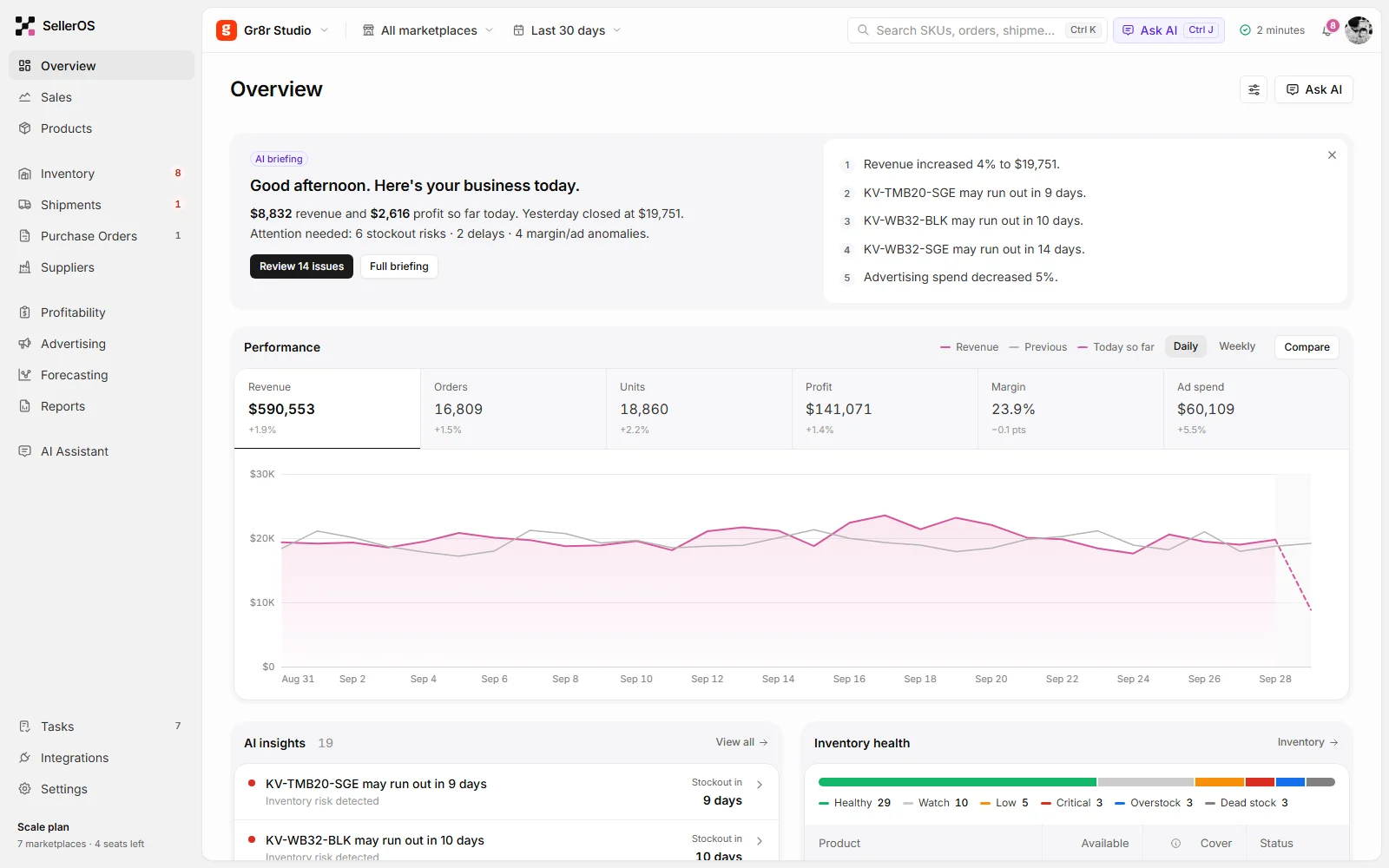
    SellerOS · Commerce operations platform · 2026

    Built by Gr8r for its own portfolio. Not client work.

    SellerOS: one clear workspace for marketplace sellers.

    A seller running several marketplaces watches sales, stock, inbound shipments, ads and margins, usually in separate tools. Stockouts, delays and margin changes are easy to miss until they cost money. The product had to show what needs attention first, and explain why.

    What we did
    Product strategy, UX & UI design, Frontend engineering
    Outcome
    One daily briefing
    Read the case study: SellerOS
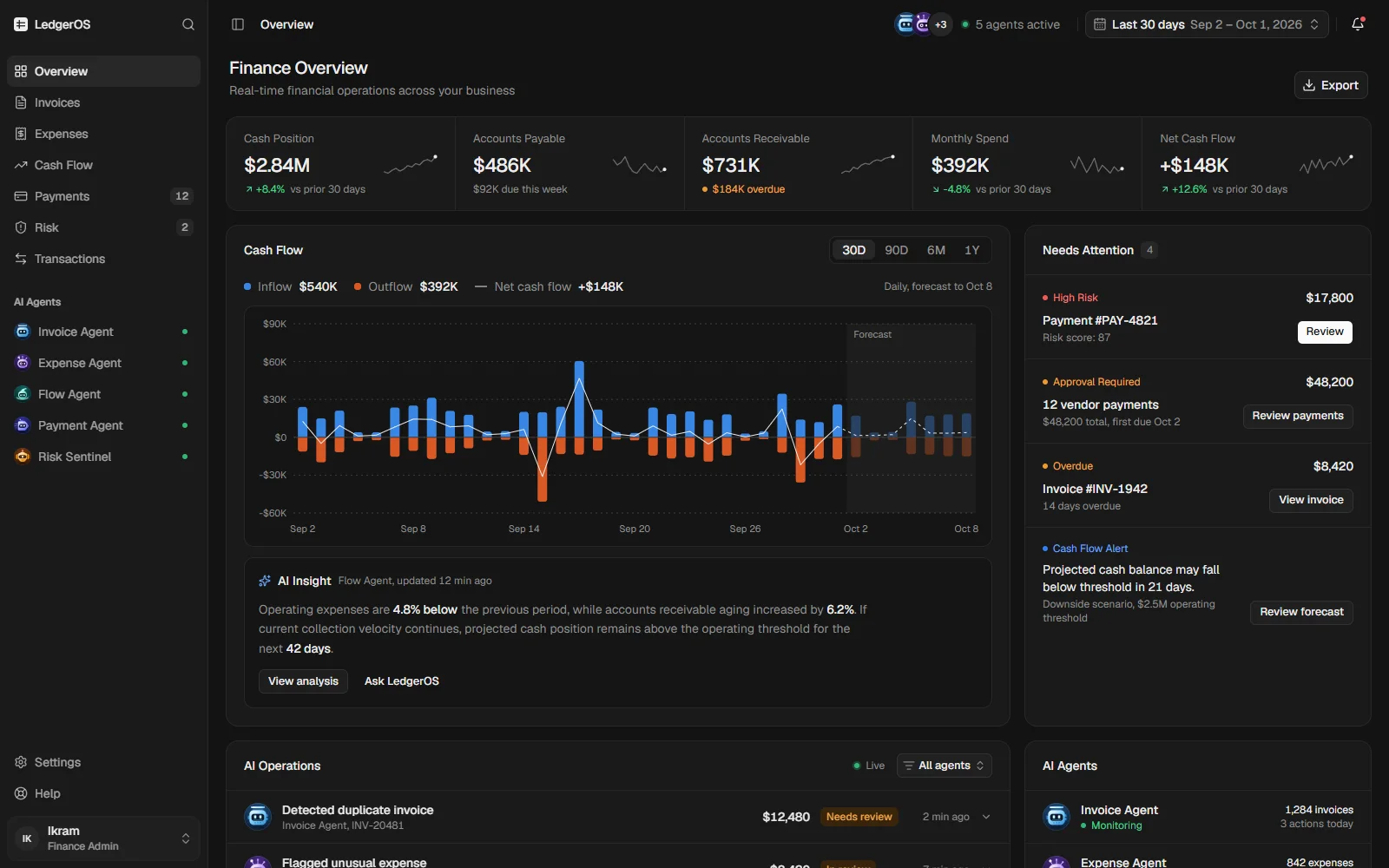
  3. Product case studyAIFintech

    LedgerOS · Finance operations platform · 2026

    Built by Gr8r for its own portfolio. Not client work.

    LedgerOS: AI agents run the routine finance work, people make the calls.

    A finance team chases late invoices, codes card spend, approves vendor payments and watches cash, often in separate tools. Automation only helps if the team can see what each agent did and stop anything that looks wrong. The product had to make agent work visible and keep every risky decision with a person.

    What we did
    Product strategy, UX & UI design, Frontend engineering
    Outcome
    One view of the money
    Read the case study: LedgerOS
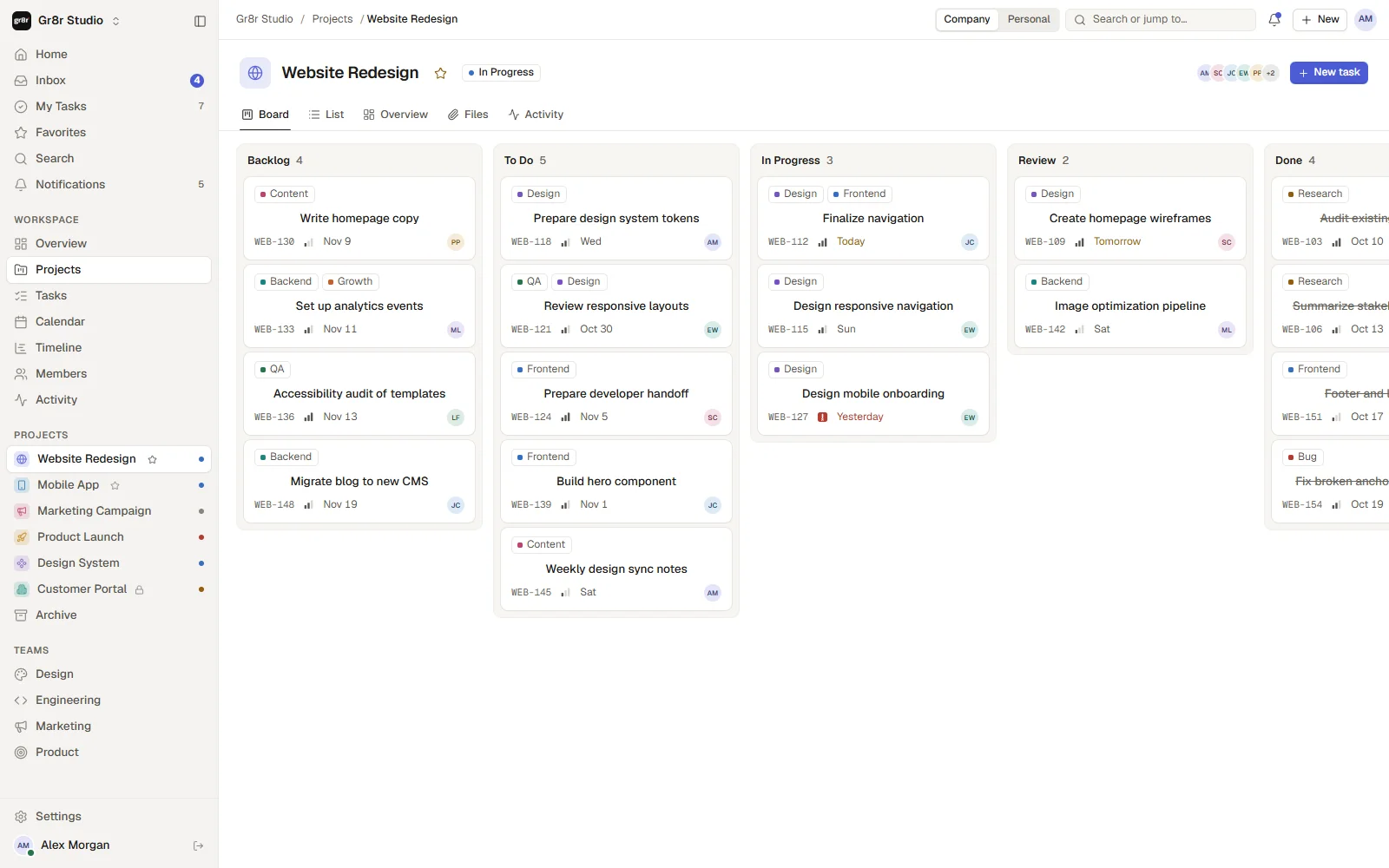
  4. Product case studySaaSProductivity

    Task management app · Project and task management · 2026

    Built by Gr8r for its own portfolio. Not client work.

    A task workspace that shows the whole team's work at a glance.

    As a team grows, work scatters across boards, chats and calendars. People lose track of what is theirs, what is late and which project is at risk. The product had to give each person a clear list and give leads the whole picture, without adding process.

    What we did
    Product strategy, UX & UI design, Frontend engineering
    Outcome
    1.8K+ stars on GitHub
    Read the case study: Task Management App

By the numbers

The experience behind our work.

Our designers and engineers bring years of experience to every project, working together from design to delivery.

Funding raised by companies we've worked with
$115M+
Projects designed and delivered
50+
Years of product design and development experience
10+
People across strategy, design, and engineering
15+

FAQs

Good questions deserve clear answers.

Learn more about our services, pricing, and how we work. If you have something specific in mind, just ask.

Gr8r Studio is a digital product design and AI engineering company. We help scaleups and enterprise teams design and build software, improve existing products, and automate business workflows. Our team covers product strategy, UX design, and software engineering, from planning through delivery.

Our projects start at $8,000, monthly retainers start at $5,500, and UX audits cost $1,500. The final price depends on your requirements, the complexity of the work, and what needs to be delivered. We agree on the scope and pricing before the project starts.

No. You can come to us with an idea, an existing product, or a business problem you're trying to solve. We'll discuss your goals, review what you already have, and help define the requirements before giving you a project proposal.

Yes, for products that fit an agreed scope. Our seven day redesign service includes Figma designs, a design system, and a design.md file for developer handoff. We'll review your product first to confirm what's realistic. Larger products with more complicated workflows may need additional time.

Yes. We can improve existing products and connect software through APIs, databases, and other integrations. Before recommending an approach, we review your current setup, technical requirements, and any limitations. You don't always need to rebuild everything to make your software work better.

No. Sometimes a better interface, a simple automation, or a change to your existing software is enough. We look at the problem first and recommend AI only when it makes sense. Our goal is to build something useful, not add technology your business doesn't need.

We start by understanding what the system needs to do and where mistakes could cause problems. We plan testing around real situations, unexpected inputs, data access, and error handling. For important decisions, we consider human approval and other safeguards. The right approach depends on the application and its risks.

Your business retains ownership of its data. Ownership of the agreed custom designs, source code, and project files transfers according to our contract and payment terms. Third party tools and components may have separate licenses. We explain what's included in the handover before work begins.

Yes. Our UX audit costs $1,500 and helps identify usability problems and areas worth improving. You'll receive findings and recommendations based on the agreed scope. If a separate free introductory review is available, we'll explain what it includes before you book.

We agree on testing, documentation, and handover before the project ends. If you need ongoing improvements, new features, or engineering support, we can discuss a separate project or monthly retainer. That way, your team knows what's included at launch and what support is available afterward.

Book a call with our CEO.

Pick a time that suits you. A product idea or a workflow that slows your team down: a clear problem is enough, no full specification needed.

Your call is with Tanjim Islam, our CEOA free 30-minute conversation about your problem, not a sales pitch.

Calendar not loading? Open the booking page