

9 Red Flags When Hiring a Software Development Company

Tanjim Islam
Founder & CEO · · 5 min read


Nine red flags should make you slow down or walk away from a software development company: no live work, a price before any question, a team you cannot meet, yes to everything, no weekly demos, vague answers on AI testing, accounts in their name, hesitation on ownership, and pressure to sign fast.
This post expands the red flags section of our guide to hiring an AI engineering partner. If you are still building a shortlist, how to choose an AI MVP development company is the place to start.
Why look for red flags at all?
Because bad partnerships often show warning signs before anyone signs.
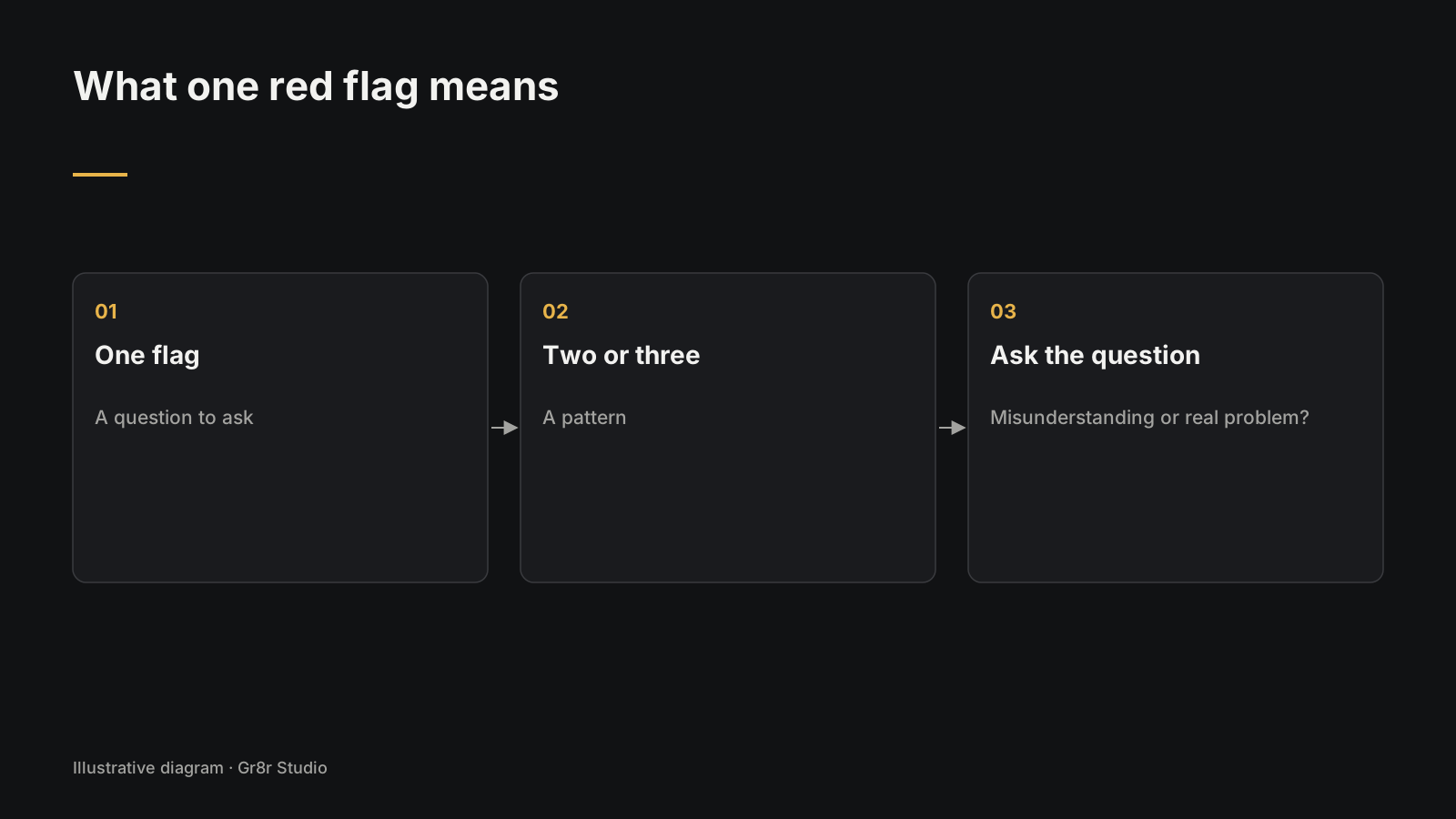
One red flag is a question to ask. Two or three together is a pattern. Each flag below comes with what it looks like on a real call and one question that tells you whether it is a misunderstanding or a real problem.
Which red flags show up before the first call?
1. No live work you can open. The portfolio is mockups on gradient backgrounds, and every link goes to a case study page. Ask: "Can you send three products you built that I can open in a browser today?" Then open them on your phone.
2. A price before any question. You send a one page brief and get a number back the same day, with no questions about your users or data. Ask: "What did you assume about our users to get this number?"
Which red flags show up on the call?
3. You cannot meet the team. The sales lead answers every question, and the people who would build your product never appear. Ask: "Can we book ten minutes each with the designer and the engineer before we sign?"
4. Yes to everything. Every feature fits, every deadline works, and nobody pushes back on the brief. Ask: "What would you advise us not to build?" A partner who cannot name one thing has not thought about your problem.
5. No rhythm of working software. They describe a long build followed by a big reveal. Ask: "When will we first see working software, and how often after that?" Weekly is a healthy answer.
Which red flags are specific to AI projects?
6. Vague answers on AI testing and safety. Ask how they test AI output before it ships. A good answer describes a set of real examples with known right answers that runs on every change. Also ask which risks from the OWASP Top 10 for LLM applications apply to your product. The 2025 list includes prompt injection, sensitive information disclosure and excessive agency (OWASP GenAI Security Project, LLM Top 10, fetched 25 Oct 2026). If the answer is about the model they like instead, that is the flag.
Watch the screens too. Ask what the user sees when the AI is unsure. A partner who has shipped AI will describe a screen, such as a low confidence label, a source link, or an approval button. A partner who has only demoed AI will describe the model.
Which red flags show up in the contract?
7. Accounts in their name. The repository, hosting, domain or AI provider keys sit in the company's accounts "for convenience". Ask: "Can the repository and cloud accounts be in our name from day one?" GitHub's documentation notes that a transferred repository's "issues, pull requests, wiki, stars, and watchers are also transferred" (GitHub Docs, Transferring a repository, fetched 25 Oct 2026). That works, but starting in your account means there is nothing to chase later.
8. Hesitation on ownership. The contract says you own "deliverables" but is silent on source files, prompts, test sets and model settings. Ask: "Will you list code, designs, prompts, test sets, data and accounts as ours once paid for?" At Gr8r, clients own everything once it's paid for. Check every line with the AI ownership checklist.
9. Pressure to sign fast. A discount that expires on Friday, or a team that "might not be free next month". Ask: "Can we start with a short paid first piece instead?" A partner confident in the work will usually say yes.
Is every red flag a reason to walk away?
No. Some are a misunderstanding a single question clears up.
Here is an illustration, not a real case. A company sends a fast quote, but when asked, explains it reused the assumptions from a similar product and lists them. That is a reasonable answer. A company that cannot say what it assumed is a different story.
| Flag | Usually fixable | Usually a reason to stop |
|---|---|---|
| Fast quote | Assumptions listed when asked | No assumptions at all |
| Team not on call | Meeting booked within days | Refused or delayed until after signing |
| Accounts in their name | Moved to yours before kickoff | Refused |
| Ownership wording | Clause rewritten on request | Refused |
What should you do when you spot one?
Ask the follow up question, write down the answer, and score it next to the other companies on the same sheet. Our 15 questions to ask before hiring a software development company give you the full card. Our covers how we handle ownership and handover.
Frequently asked questions
What is the biggest red flag when hiring a software development company?
In our view, a company that cannot show you live work you can open. Case study slides are easy to make. A working product is not.
Is a low quote a red flag?
Not on its own. It becomes one when the quote arrives before any questions about your users or data, because it means the company priced a guess.
Should you walk away if a company will not let you meet the team?
Ask once more, clearly. If they still will not let you speak with the designer and engineer who would do the work, that is a strong reason to keep looking.
What red flags are specific to AI projects?
Watch for a company that cannot describe how it tests AI output before launch, has no answer on risks like prompt injection, and has not thought about what the user sees when the AI is wrong.
What should a contract say to avoid ownership problems?
It should say code, designs, prompts, test sets, data and accounts belong to you once paid for, with the repository and cloud accounts in your name from day one.
About the author
Tanjim Islam is the founder and CEO of Gr8r Studio. He founded the studio in 2023. Here he writes about how Gr8r approaches hiring, product design and AI engineering. More on the About page.
If you want help with this, book a 30 minute call.